

Document overview
Operator's manual for SAME EXPLORER 75 → S10S714WX1E13001 from the EXPLORER family. Digital PDF in English, 246 pages.
The original table of contents contains 62 sections and 183 detailed topics, providing a clear view of the systems and procedures covered by this edition.
- Preface
- IDENTIFICATION
- SAFETY
- GETTING TO KNOW YOUR TRACTOR
- USING THE TRACTOR
- STORING THE TRACTOR
- MAINTENANCE OPERATIONS
- FAULT DIAGNOSIS
- WHEELS
- ELECTRICAL SYSTEM
- TECHNICAL DATA
Document details
- Brand: SAME
- Family: EXPLORER
- Model: EXPLORER 75
- Starting serial number: S10S714WX1E13001
- Document type: Operator's manual
- Language: English
- Pages: 246
- File size: 17.21 MiB
- Format: Digital PDF download
Compatibility
Before purchasing, verify that the model and starting serial number of your machine match EXPLORER 75 → S10S714WX1E13001.
Complete table of contents
Preface
Important
- Warning
- Handover of the tractor to the customer
- To the owner of the new tractor
IDENTIFICATION
- List of model serial numbers
Identification plates
- Tractor identification label
- Tractor serial number
- Engine registration number
- Engine identification plate
- Roll over protection frame identification plate
- Change of ownership of the tractor.
Glossary
- Technical terms used in this manual
- Acronyms used in this manual
- Units of measurement used in this manual and conversion factors
Warranty
- Warranty terms and conditions
- Exclusions to the warranty
- Intended use
- Conditions rendering the warranty null and void
- Emissions Warranty (for North America market only)
- Original spare parts
SAFETY
- Introduction
Practical advice on safe working procedures
- Protect the Environment
- General safety rules
Accident prevention and personal safety
- Safety clothing and equipment
- Exposure to noise
- Boarding and alighting from the tractor
- Parking the tractor
- Cleaning the tractor
Operation
- Checking indicator lights
- Starting fluids
- Auxiliary equipment
- Towing safely
- Driving on the road
- Overturning
- Repairs and maintenance in safety
Protective structure and seat belt
- Roll-over protective structure (R.O.P.S.)
- Seat belt
- Emergency stop
Correct and incorrect use of the tractor
- Intended usage
- Improper and incorrect usage
Safety warning notices
- Adhesive safety warning decals
GETTING TO KNOW YOUR TRACTOR
Exterior views of the tractor
- External views of the tractor
Access to the driving position
- Access to the driving position
Operator seat
- CMVR seat
- “KAB XH2” seat
- GRAMMER MSG83/721” seat with mechanical suspension and PVC upholstery
- Passenger seats
- Seat belt
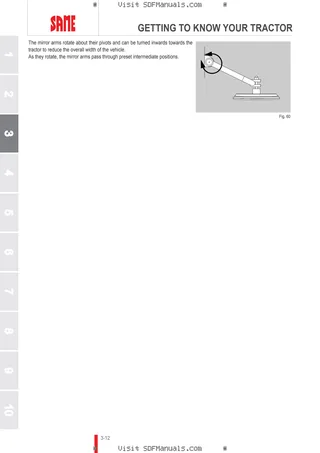
Rear-view mirrors
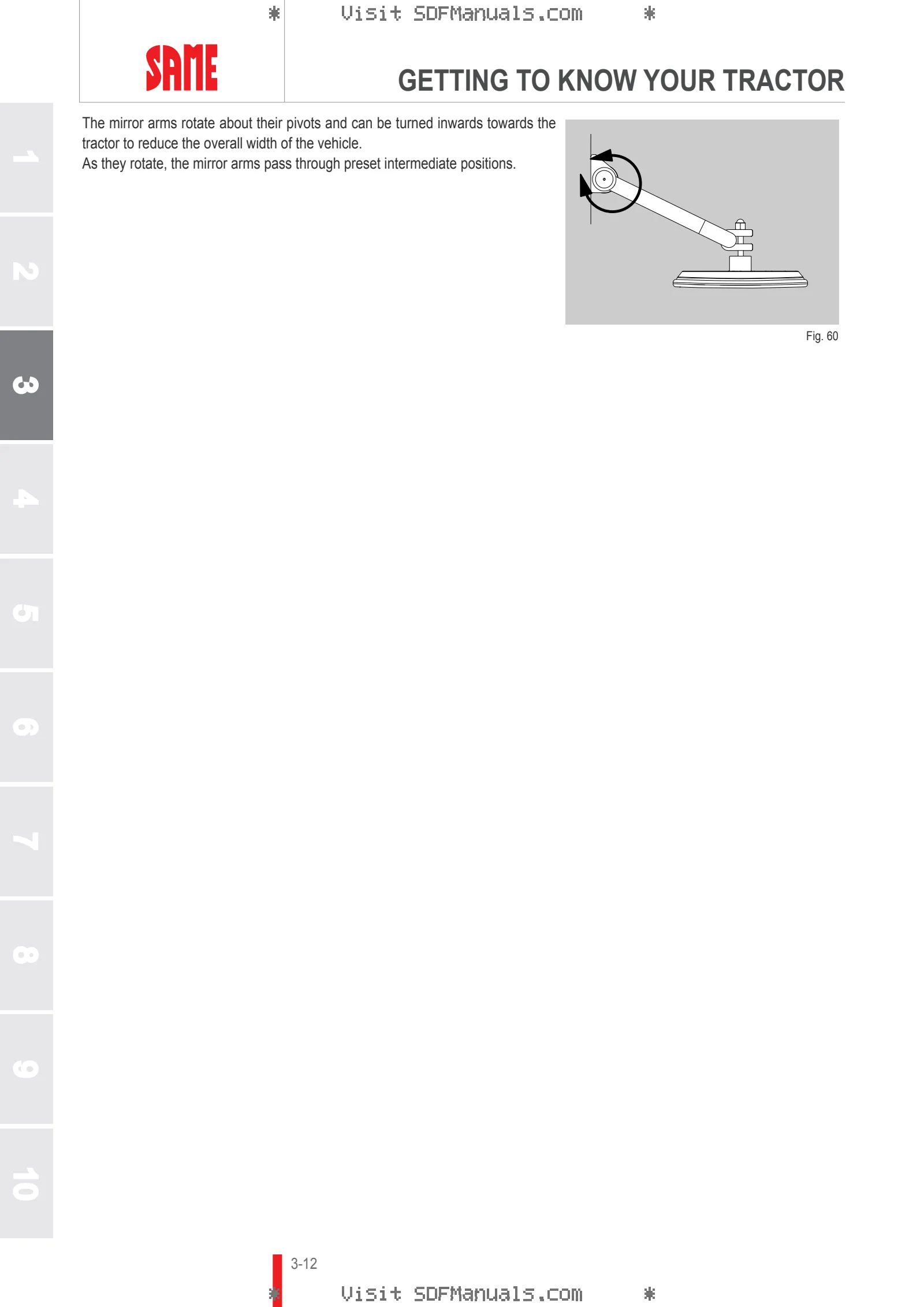
- External rear-view mirrors
Instruments and tractor controls
- Instruments and tractor controls
- Instrument cluster
- Console switches
- Right-hand console
- Protective structure and seat belt
- Hazard warning triangle
- Tool box
- Immobilising the tractor using the wheel chocks
Other controls
- Control pedals
- Clutch control pedal
- Brake pedal
- Parking brake lever
- Accelerator pedal
- Mechanical hand throttle lever
- Transmission controls
USING THE TRACTOR
Introduction
- Engine – first 50 operating hours
Starting – Stopping the engine
- Starting the engine
- Switching off the engine
- Leaving the tractor in safe conditions
- Leaving the tractor safely with a trailer hitched
- Turbocharging using the turbocharger
Transmission
- Transmission
Four-wheel drive – Differential lock
- Engaging front-wheel drive
- Front and rear differential locks
Braking
- Brakes, “SEPARATE BRAKES” Valve
Rear PTO
- Rear PTO
- Coupling and uncoupling of PTO-driven implements
Hydraulic rear lift
- Hydraulic lift
- Rear lift with mechanical “LOAD SENSING” control
3-point linkage
- 3-point linkage
Hydraulic system
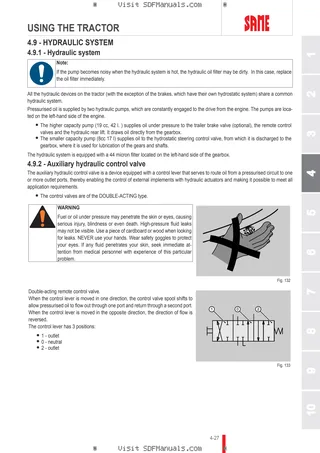
- Hydraulic system
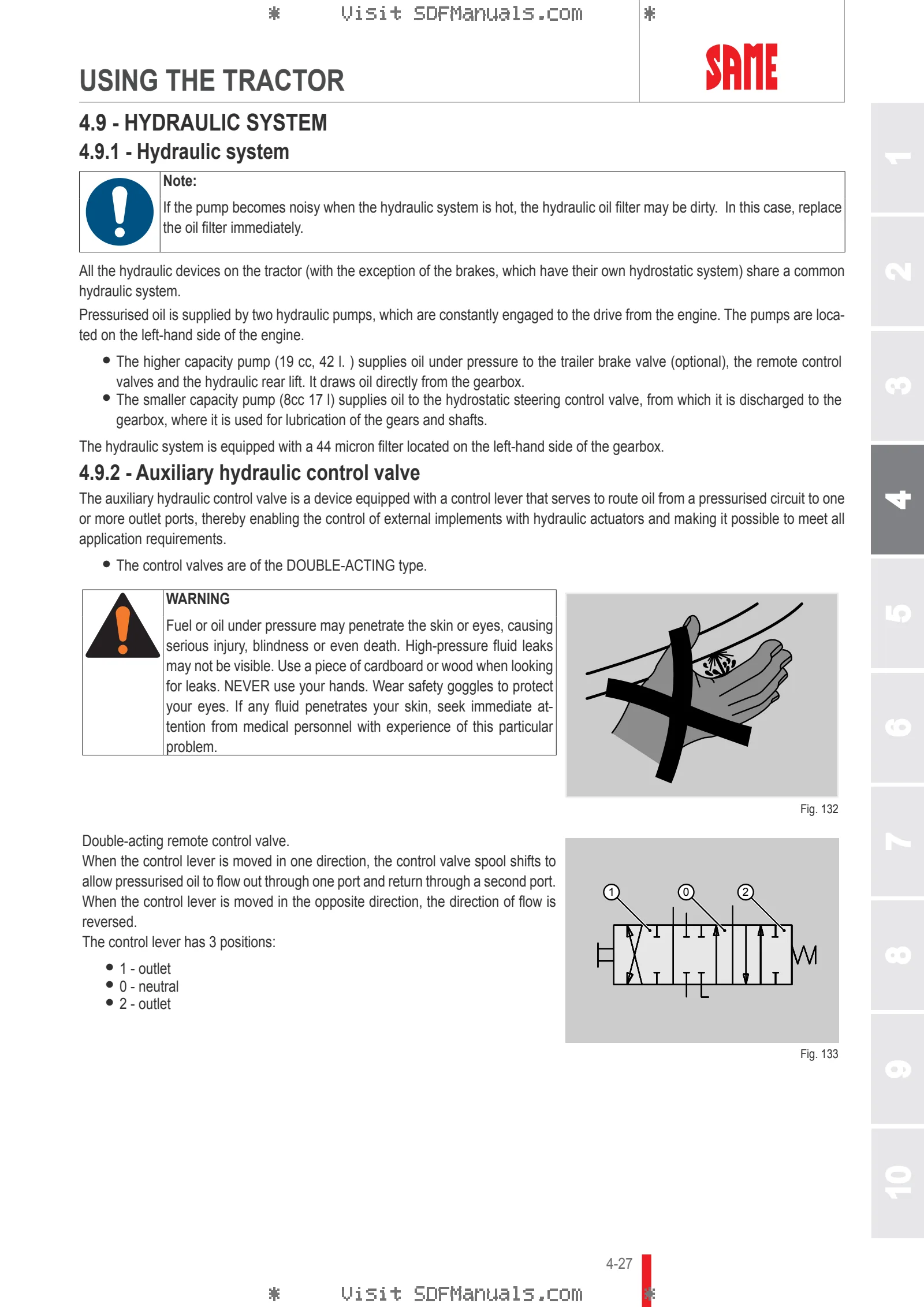
- Auxiliary hydraulic control valve
- Types of remote control valve
- Remote valve controls
- Correspondence between the control levers and the hydraulic service couplers
- Remote control valve operation
Towing devices
- Towing devices
- Trailer towing eye-towing hitch compatibility
- Category “A” drawbar”
- Class “C” towing hitch
- Class “C” towing hitch with rapid height adjustment
- “EEC” towing hitch
- “EEC” automatic towing hitch
- Category II drilled drawbar
- Front towing hitch
STORING THE TRACTOR
Storing the tractor
- Overview of procedures
- Operations prior to a long period of non-use
- Operations after a long period of non-use
Decommissioning and scrapping the tractor harvester and disposing of packaging materials
- Decommissioning the tractor
- Scrapping the tractor
- Disposing of packaging materials
MAINTENANCE OPERATIONS
Maintenance operations
- Maintenance intervals
- Washing the tractor/attached implements
- Fluids – Lubricants and fill volumes
- Service intervals
- Maintenance and inspection schedule
Accessing the engine compartment
- Accessing the engine compartment
Daily intervention
- General inspection of tractor
- Checking the engine oil level
- Checking the coolant level
- Checking the fuel level
- Check the electrical system
- Checking the protective structure and seat belt
Maintenance every 50 hours
- Checking the transmission oil level
- Grease the rear axle
- Greasing the pivot system of the 2WD front axle
- Greasing the 4WD front axle
- Checking brake reservoir oil level
- Check the battery
- Greasing the rear 3-point linkage
- Checking wheels and tyres
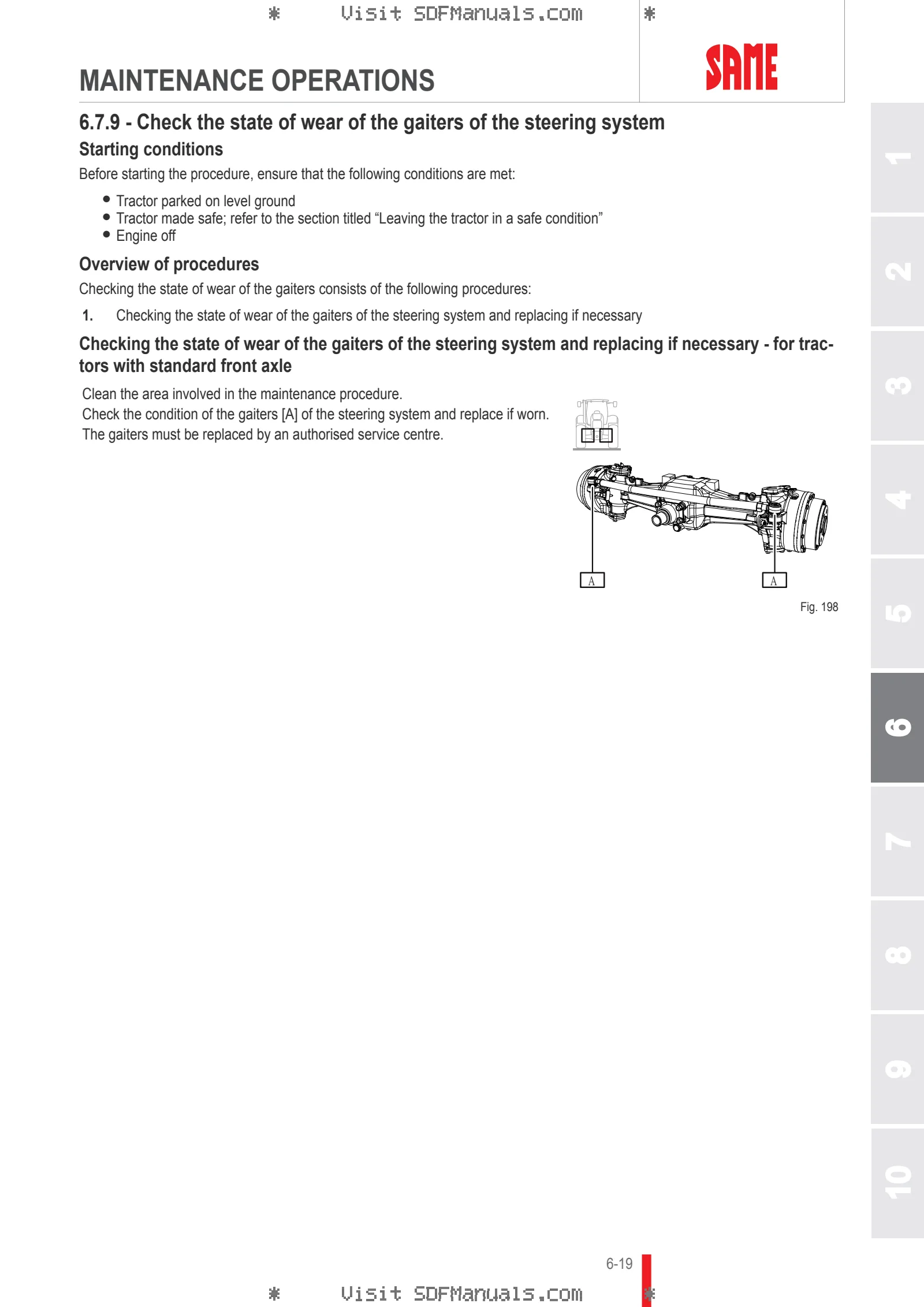
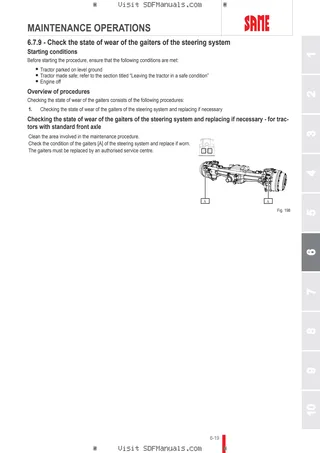
- Check the state of wear of the gaiters of the steering system
Maintenance at 100 hours (1st service)
- Checking the braking distance
- Checking engine drivebelt tension
- Changing the engine oil
- Changing the engine oil filter cartridge
- Checking and cleaning the radiator
- Changing the fuel filter
- Changing the transmission oil filters
- Checking the parking brake lever
- Checking the oil pipelines
Maintenance every 300 hours
- Checking the front axle oil level (4WD)
- Adjusting the clutch pedal
Maintenance every 600 hours
- Checking the differential lock system
- Front wheel hub bearings (2WD)
- Checking the braking system with safety brakes valve
Maintenance every 1200 hours or at least once a year
- Cleaning engine air filter
- Bleeding the fuel circuit
Maintenance every 1200 hours or at least every two years
- Changing the coolant and flushing the circuit
- Changing the transmission oil
- Changing the differential oil, planetary reduction unit oil and side final drives oil (4WD)
General maintenance
- Bleeding the hydraulic braking system
- Check the brake pedals
- Contact an authorised service centre
FAULT DIAGNOSIS
- Engine troubleshooting
- Gearbox troubleshooting
- Power take-off troubleshooting
- Front wheel drive troubleshooting
- Brake fault diagnosis
- Lift troubleshooting
- Hydraulic system troubleshooting
- Hydraulic remote valves troubleshooting
- Electrical system troubleshooting
- Fault diagnosis
- Emergency types
Towing the tractor in the event of a breakdown
- Warnings
- General rules for towing the tractor in the event of a breakdown
- Preparing tractor for towing
WHEELS
Introduction
- General information regarding tyres
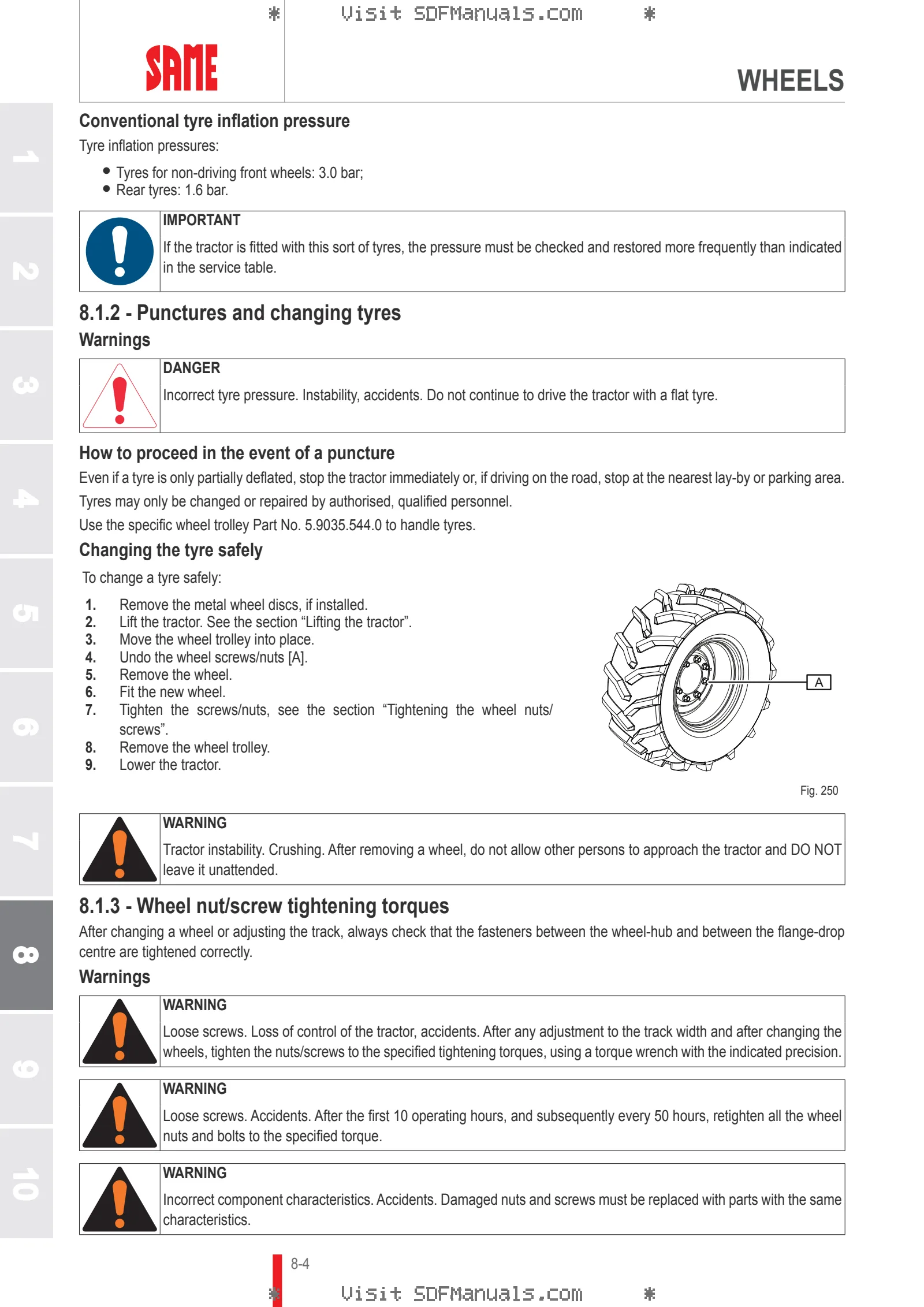
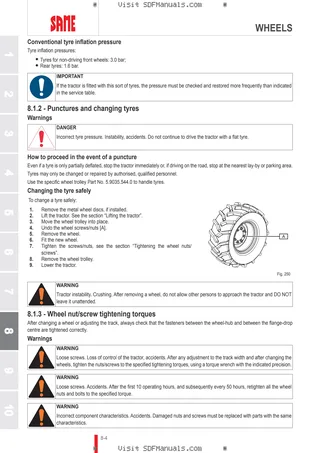
- Punctures and changing tyres
- Wheel nut/screw tightening torques
Tyre combinations
- Permissible tyre combinations
Track width calculation
- Minimum track width
- Track width adjustment
- Adjustment of fixed front fenders
- Calculating the mechanical lead
Ballasting
- Tractor ballast
- Front ballast with cast-iron blocks
- Ballast discs for rear wheels
- Ballast for wheels with water-filled tyres
- Weighing the tractor
- Tractor/implement combination
ELECTRICAL SYSTEM
Battery
- Battery
Cab fuse box
- Fuse box
- Key to fuse and relay symbols
Lights for road use
- Lights for road use
- Headlight alignment
Worklights
- Work lights
Accessories
- Installation of additional electronic components and/or equipment
- Power outlet sockets
TECHNICAL DATA
Technical data of the tractor
- Technical data
- Coolant
- Fuels and additives
Dimensions and weights
- Dimensions and weights of the tractor
Implement attachment diagrams
- Implement coupling holes diagram